
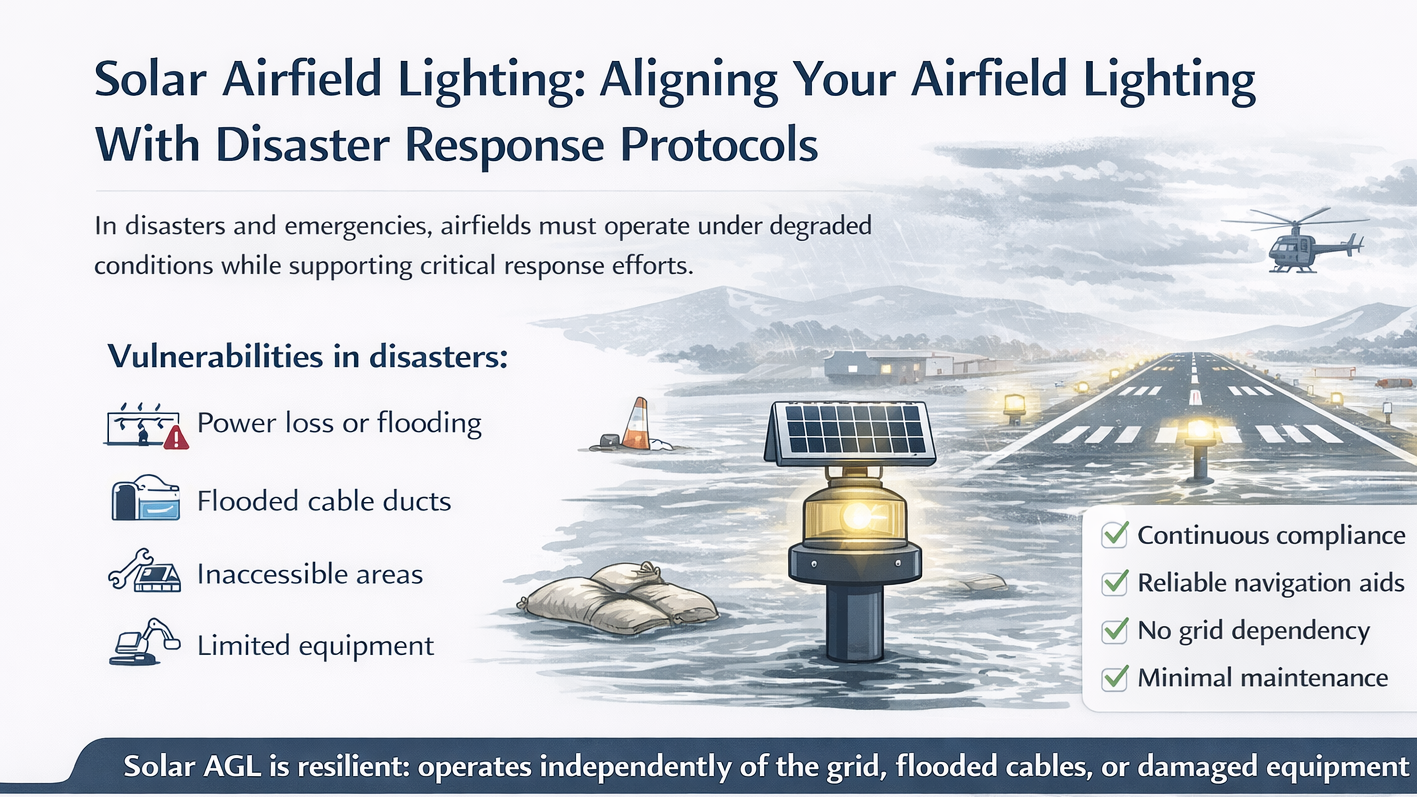
During natural disasters and large-scale emergencies, airfields often shift from routine operations to a critical role in evacuation, medical transport, humanitarian aid, and state response. Earthquakes, floods, wildfires, severe storms, or armed conflict can simultaneously increase operational demand while disabling conventional infrastructure.
Post-incident assessments show that conventional airfield ground lighting systems are often affected by:
📍Loss of external power supply or damaged substations
📍Flooded cable ducts and transformer pits
📍Inaccessible airside areas preventing immediate repairs
📍Limited availability of heavy equipment or specialist technicians
When installed as a primary, permanent lighting system, solar AGL already forms part of the aerodrome’s certified infrastructure and continues to operate during emergencies due to its independence from external power networks.
Because each unit is self-contained, operation is unaffected by grid failure, flooded ducts, or damaged CCRs. Routine maintenance can be performed without specialized equipment, supporting continued availability throughout response and recovery phases.
When included in aerodrome emergency and contingency planning, primary solar AGL enhances operational resilience by maintaining compliant visual guidance even under degraded infrastructure conditions.
SALA advises airports to include solar AGL in emergency planning to ensure continuous, compliant lighting even under extreme conditions.