
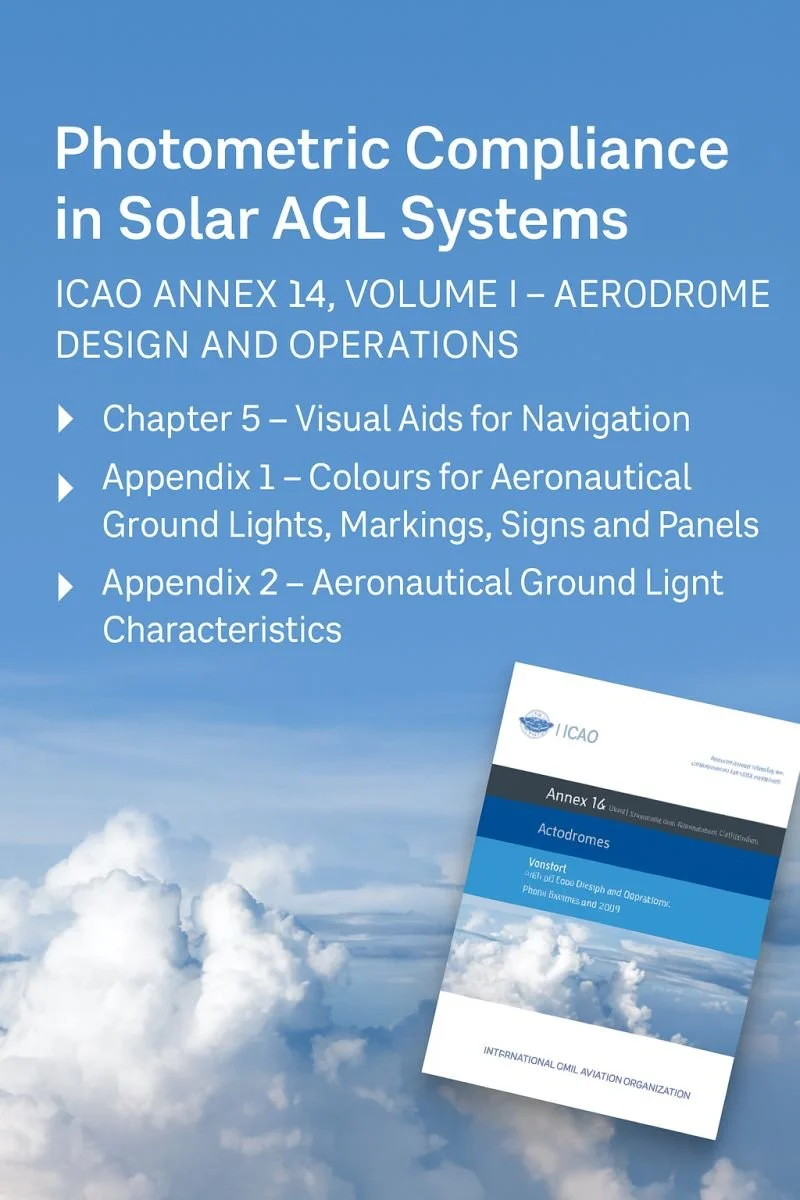
The photometric performance of airfield lights is critical because it directly affects pilot visibility and safe landings. If lights are too dim, incorrectly distributed, or not compliant with standards, pilots may not clearly see the runway environment — increasing the risk of serious incidents.
In aviation, everything starts with one key document: ICAO Annex 14, Volume I – Aerodrome Design and Operations - 9th Edition dated on 2022 (currently the latest one). It is the “bible for airports” — every country uses it as the main reference when creating national regulations.
The detailed photometric requirements for airfield lighting can be found in:
➡️ Chapter 5 – Visual Aids for Navigation
➡️ Appendix 1 – Colours for Aeronautical Ground Lights, Markings, Signs and Panels
➡️ Appendix 2 – Aeronautical Ground Light Characteristics.
Modern solar-powered airfield lighting systems can fully meet these requirements — but only if the manufacturer follows the standards. That’s why airports must always:
✅ Ask manufacturers for official certificates of compliance (ICAO / FAA / EASA).
✅ Review real photometric test results issued by independent laboratories, not just marketing brochures.
Always request proper compliance certificates from your suppliers — and contact us if you need support in verifying them.
Next
Next