
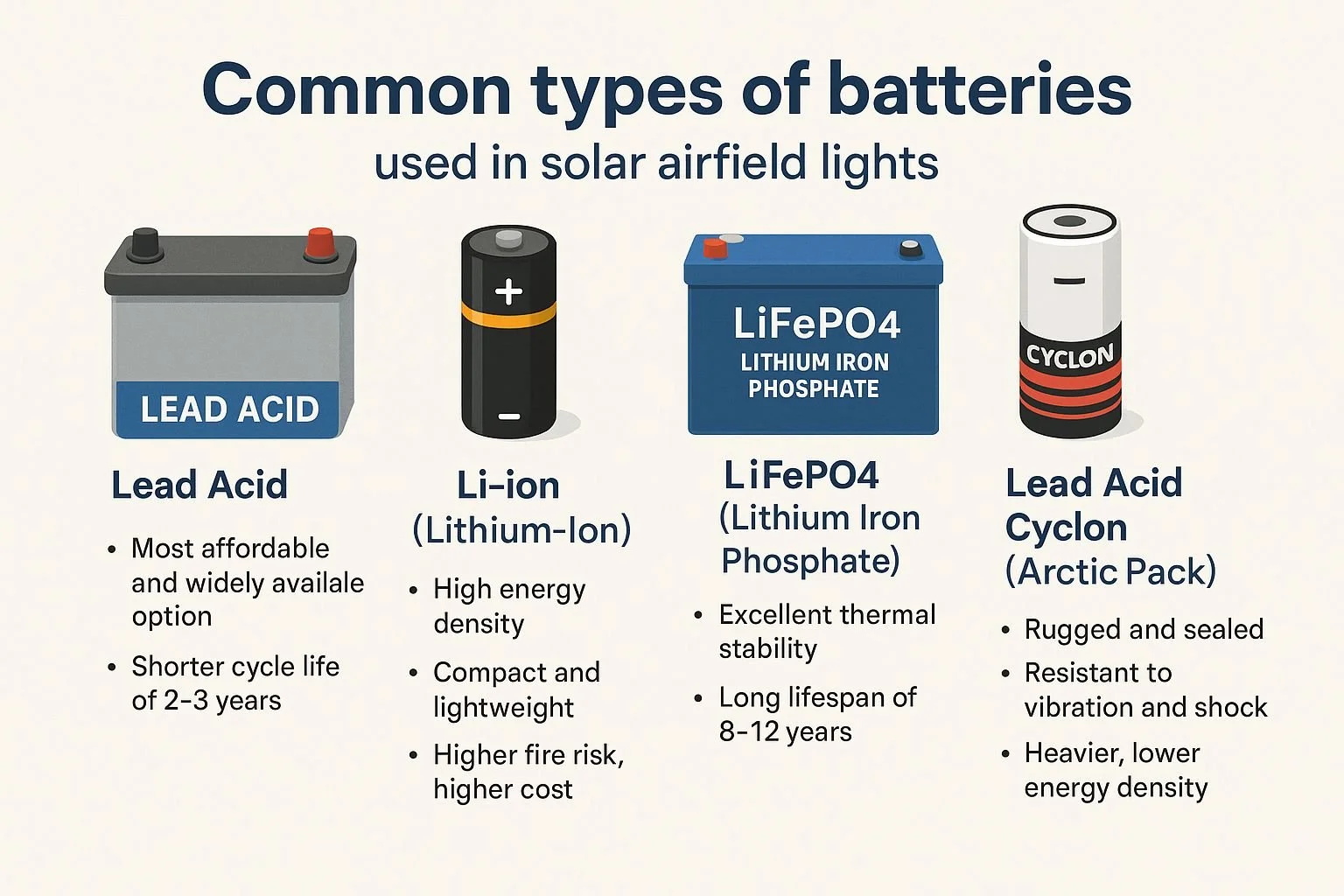
Batteries are a critical component of solar Airfield Ground Lighting (AGL) systems, determining autonomy, lifespan, and operational reliability. Modern solar AGL products typically use user-replaceable batteries, and the choice of battery type affects performance, maintenance, and longevity.
Common types of batteries in solar AGL include:
📍Lead Acid: Most affordable and widely available option. They are commonly used by most solar AGL manufacturers and are easy to source. Suitable for airports where cost is the main factor, since they are affordably priced and available for purchase everywhere.
📍Li-ion (Lithium-Ion): Provide high energy density, making them compact, lightweight, and efficient. They are a good choice for portable or space-limited applications. The drawbacks include sensitivity to temperature, a higher fire risk, and significantly higher cost—around three to four times that of lead acid.
📍LiFePO4 (Lithium Iron Phosphate): Offer excellent thermal stability, safety, and a wide operating temperature range. With a very long lifespan of 8–12 years, they are ideal for airports that prioritize safety and longevity. Their only disadvantages are a higher upfront cost and slightly lower energy density compared to standard Li-ion batteries.
📍Lead Acid Cyclon: Rugged, sealed, and resistant to vibration and shock. While they are heavier and have lower energy density compared to lithium options, they are highly reliable in harsh conditions. This makes them particularly well-suited for military or trailer-based systems operating in extreme climates.
When selecting a battery, it is important to consider the autonomy requirements for expected flight operations, the environmental conditions, including temperature extremes, the cycle life and replacement schedules, and the transportability and maintenance needs, particularly for user-replaceable designs.